PFAS in the Delaware River: What the Latest Research Means for Our Communities
If you’ve been following environmental news, you’ve probably heard of PFAS—per- and polyfluoroalkyl substances, sometimes called “forever chemicals.” These compounds have been used since the 1940s in nonstick cookware, firefighting foams, water-repellent fabrics, and food packaging. They are prized for their durability—and that’s exactly the problem. PFAS don’t readily break down, and they accumulate in our waterways, wildlife, and even in human blood serum.
A new 2025 study focused on the Delaware River watershed reveals that PFAS are not just a global problem, but a local one. Researchers sampled water from Trenton down to Pea Patch Island and found persistent contamination across urban and industrial areas
Key Findings from the Study
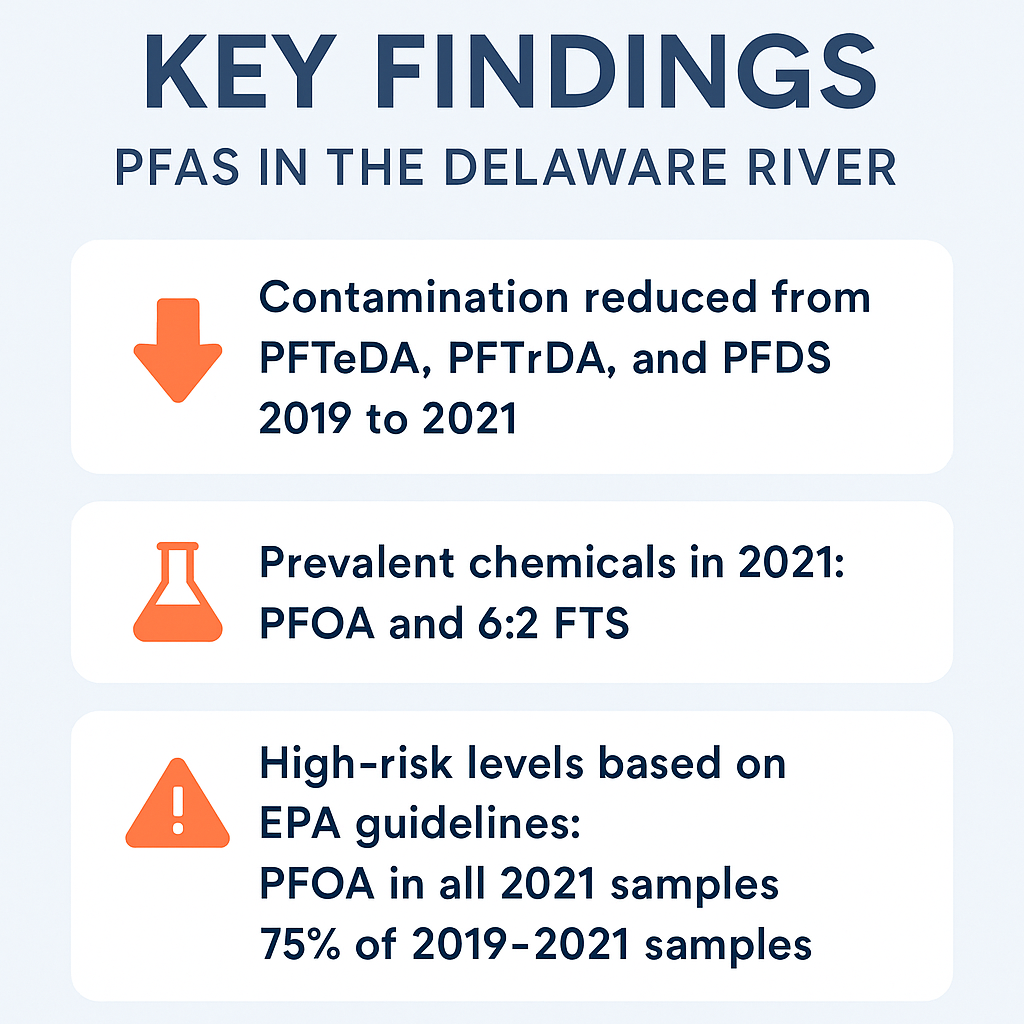
High levels of PFOA and PFOS: These two legacy PFAS compounds were consistently detected in all samples. By 2022 EPA standards, more than 90% of samples showed high risk levels of PFOA contamination.
Downstream accumulation: PFAS levels tended to increase as the river flowed south, reflecting the cumulative impact of wastewater treatment plants, industrial facilities, and runof.
Shifting profiles: While older PFAS like PFTeDA and PFTrDA were dominant in 2019, newer replacements such as 6:2 FTS became more prevalent by 2021—showing how regulation and phase-outs shift, but don’t eliminate, chemical burdens.
Health risks: PFAS exposure is linked to liver damage, thyroid disease, cancers, infertility, and developmental issues.
Why This Matters for Delaware
The Delaware River is not only an ecological treasure, it’s a source of drinking water for millions. PFAS contamination represents both an environmental and public health challenge. Even as regulations tighten, studies show that these chemicals persist—and in many cases, risk levels exceed EPA’s most recent guidance.
At Delaware Analytical, we are committed to advancing environmental testing services that protect both ecosystems and public health. That’s why we are developing PFAS testing methods in our laboratory. By early 2026, we plan to have validated methods for analyzing PFAS in water and environmental samples.
Interested in testing your water or environmental samples for PFAS? Please email us today to get on our wait list for PFAS testing services. 📧 Info@delawareanalytical.com
Final Word
PFAS may be “forever chemicals,” but that doesn’t mean they should remain forever unmeasured. By building capacity for PFAS detection and water quality analysis in Delaware, we can help communities, researchers, and regulators take informed action to reduce risk and protect our shared waters.
